


Our Net-Zero Roadmap

We’re committing to
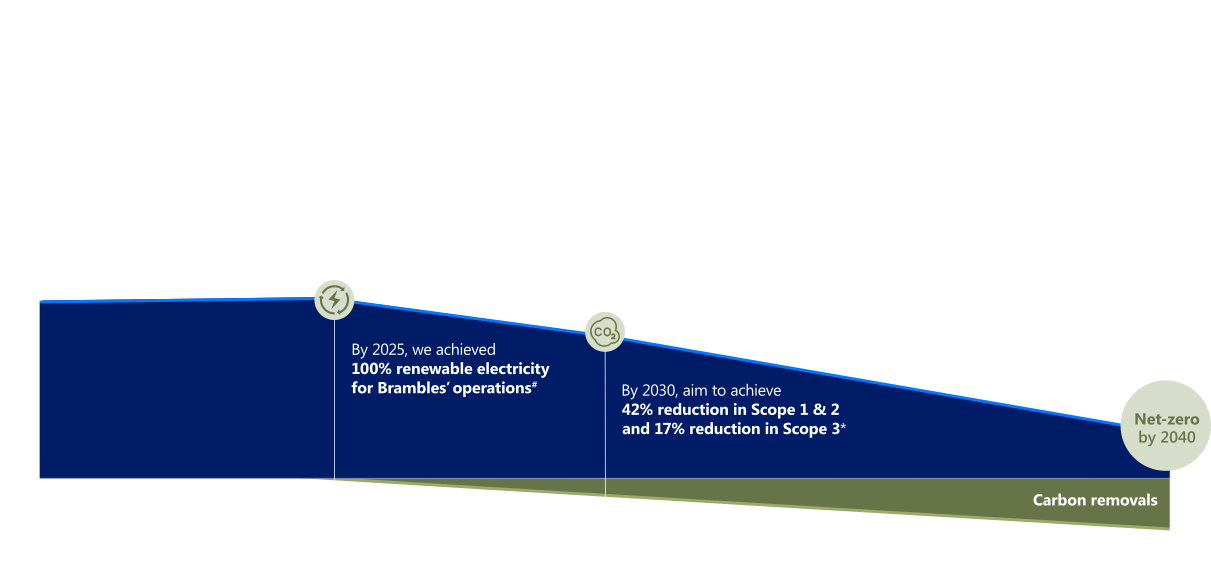
net-zero emissions by 2040
As part of the Brambles Sustainability programme, we are accelerating our decarbonisation strategy towards pioneering regenerative supply chains.
Brambles has announced its commitment to achieving net-zero greenhouse gas (GHG) emissions by 2040. The company’s pledge to a 1.5°C climate future was an essential driving force behind its five-year sustainability targets published in 2020. By pledging to align with the goals of the Paris Climate Agreement, Brambles was already committed to achieving net-zero greenhouse gas (GHG) emissions by no later than 2050. With this new roadmap to net-zero emissions, the supply chain solutions company is bringing that deadline forward by ten years.

Roadmap to
Net-Zero Emissions
Net-Zero Emissions
Including 2030 science-based targets
for Scope 1, 2 and 3 emissions
for Scope 1, 2 and 3 emissions
Decarbonisation levers
Renewable electricity at Brambles and subcontracted locations
Electrification of forklift trucks
Energy efficiency
Transition away from natural gas for heating and drying
Product waste volume reduction and diversion from landfill
Digitally-enabled asset recovery and productivity
Plant network and logistics optimisation^
Zero and low emissions fuels and technologies for subcontracted trucking
Multimodal transport
Transition CHEP operated fleets to zero and low emissions vehicles§
Renewable electricity, energy efficiency and electrification
at new asset and repair materials third-party manufacturing sites
Recycled / upcycled content in products
Carbon removal projects
(e.g., forestry, biochar)
(e.g., forestry, biochar)
Emissions by source*
(ktCO2-e, FY20)
Scope 1
Brambles fleet fuel
9
Brambles site fuel
20
Scope 2
Brambles electricity
15
Scope 3
Waste
43
Outsourced service centres
150
New pallets, timber, nails, paint
354
Logistics
968
Total emissions: 1,559
Existing solution
Emerging solution
Business as usual
Emissions reduction pathway
Removals pathway

 2030 targets
 validated by SBTi
^ Logistics optimisation includes plant network and routing design, truck load optimisation, mega trucks, onsite inspection and repair solutions, improved stock balancing, and digitally-enabled transport collaboration.
§ Zero Emissions Vehicles, including battery electric vehicles (BEVs) and hydrogen fuel cell electric vehicles (FCEVs).
# Brambles’ operations refers to locations under Brambles’ operating control (relating to Scope 1 & 2) and excludes third party managed locations.
* Emissions sources in-scope for Brambles’ science-based targets. Excludes other purchased goods and services, business travel and employee commuting on the basis of materiality.
FY20 Global emissions
1,559 ktCO2-e
Our validated science-based targets
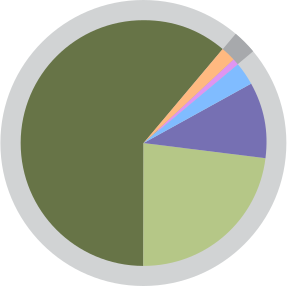
Scope 1 & 2
3%
Onsite fleet and fuel
2%
Electricity
1%
42%
absolute reduction by 2030 (on FY20 levels)
Scope 3
97%
Waste
3%
3PLs
10%
Capital goods
23%
Logistics
61%
17%
absolute reduction by 2030 (on FY20 levels)
Scope 1 emissions
Scope 1 emissions are direct greenhouse gas (GHG) emissions that occur from sources that
are controlled or owned by an organisation (e.g. emissions associated with fuel combustion
in boilers, furnaces, vehicles).
Scope 2 emissions
Scope 2 emissions are indirect GHG emissions associated with the purchase of electricity,
steam, heat, or cooling. Although Scope 2 emissions physically occur at the facility where
they are generated, they are accounted for in an organisation's GHG inventory because they
are a result of the organisation's energy use.
Scope 3 emissions
Scope 3 emissions are the result of activities from assets not owned or controlled by the
reporting organisation, but that the organisation indirectly impacts in its value chain.
Net-zero emissions
Effectively, committing to net-zero emissions means reducing emissions as much as
practicable (following a science-based trajectory), and compensating any residual
emissions through carbon removals, resulting in a net-zero impact.
Removals
Measures that companies take to remove carbon from the atmosphere and permanently
store it within or beyond the company’s own value chain.
Science-based targets
Science-based targets (SBTs) are GHG emissions reduction targets that are informed by
independent climate science. SBTs have shifted the focus from what a company believes
it can do to reduce emissions, to what a company should do to contribute its ‘fair share’ to
meeting the goals of the Paris Agreement.

“Global warming is one of the greatest challenges of our time and we need stronger action now. Brambles has a track record of reducing emissions through its circular business model, a range of innovative initiatives and its past achievements1. These targets are an important next step in a journey that we started years ago”.
“Adopting science-based targets and bringing the net-zero deadline forward by ten years accelerates our mission to build a regenerative supply chain. By delivering on our net-zero ambition and beyond, we will continue to be a sustainability global leader building the supply chains the world needs for the future.”
Juan José Freijo
Brambles Chief Sustainability Officer
1 Brambles’ 2025 Climate Positive targets also included a commitment to 100% renewable electricity and carbon neutrality across its own operations by 2025, both of which were achieved in 2021, four years ahead of the target date.


